Advancing the Power of Occupation
Wendy Stav, an occupational therapist and educator from Missouri, has spent her career advancing occupation-based practice, strengthening the profession’s evidence base, and mentoring future occupational therapy practitioners and scholars.
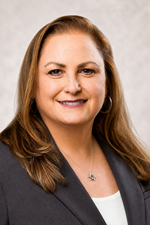
Wendy Stav, PhD, OTR/L, FAOTA
Department Chair, Undergraduate Program Director, and Professor, Department of Occupational Science and Occupational Therapy, Saint Louis University
Location: Missouri
Certified in 1991
A Career Grounded in Occupation
For more than three decades, Dr. Stav’s work has been guided by one central belief: occupation is at the heart of the profession. Through her leadership, scholarship, education, and mentorship, she has built a career focused on bridging the gap between occupational therapy theory and clinical practice. Her development of evidence-based models, assessments, and resources has transformed how occupation-based practice is understood, taught, measured, and delivered, helping practitioners apply occupational therapy’s foundational principles into real-world practice. Dr. Stav has been a dedicated mentor, guiding students, researchers, educators, and practitioners to deliver competent, occupation-based care with lasting benefits.
From Philosophy to Practice
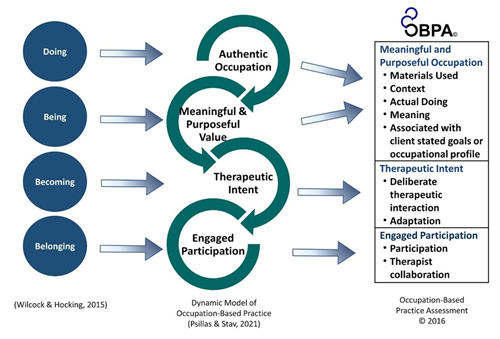
Dr. Stav believes that occupation-based practice is more than a professional philosophy; it should be visible in how occupational therapy practitioners work every day. She has consistently worked to connect occupational therapy’s foundational principles with evidence and practical application, emphasizing occupation-centered assessment, goal-writing, intervention, and documentation. She co-developed the Dynamic Model of Occupation-Based Practice, a theoretically grounded and clinically actionable framework that has helped practitioners understand and apply occupation-based practice in real-life settings based on four constructs: actual occupation, meaningful and purposeful value, therapeutic intent, and engaged participation. To measure and evaluate how occupation is incorporated into practice from these constructs, Dr. Stav created the Occupation-Based Practice Assessment, a psychometrically sound tool that captures the extent of occupation in individual interventions, group interventions, assessment, measurement tools, and the influences on the use of occupation-based practice. Together, these resources help practitioners integrate occupation into the intervention process and evaluate the degree to which their services reflect meaningful occupations. These efforts support improved efficiency, meaningful engagement, and better health outcomes for clients and populations receiving services.
“Occupation is the central tenet of all our teaching, research, and practice, which recognizes occupational participation as inextricably connected to health and well-being, distinguishing us from every other profession… With occupation at the core of teaching, the intention is to generate professionals who are occupation-centered in their philosophy [and] occupation-based in their practice… Occupation similarly placed at the center of research should aim to generate knowledge about the occupational implications of illness, demonstrate the effectiveness of occupation-based therapeutic approaches across all practice areas, and discover mechanisms to use occupation for maintenance of health for people and populations. Finally, with occupation highlighted as the primary and preferred approach in clinical practice, practitioners will administer occupation-centered assessments, write occupation-focused goals, use occupation as a therapeutic medium, document with occupational language, and yield better health outcomes more efficiently.”
Wendy Stav
Excellence Award winner
Building the Profession Through Others
For Dr. Stav, research, practice, teaching, and mentorship are interconnected; each discipline strengthens the other: research builds evidence for practice, teaching prepares practitioners to apply evidence, and mentorship develops the next generation of practitioners and scholars. That is why she is as committed to mentoring current and future practitioners as she is to conducting research. She has served as a dissertation chair, research mentor, and committee member for doctoral and master’s students, many of whom now serve as professors, program directors, academic fieldwork coordinators, researchers, and clinical specialists.
Dr. Stav’s mentoring approach goes beyond supervising a research project. She brings her mentees into the full scholarly process—developing research questions, designing studies, preparing manuscripts, publishing findings, and presenting their work. Many of her mentees have become first authors on peer-reviewed publications through their work with Dr. Stav, giving emerging scholars the opportunity to build their own professional voices and identities as researchers. Former students remain collaborators, co-authors, and contributors to ongoing research, creating a network of scholars and practitioners carrying occupation-based thinking into new settings and new areas of practice. Currently, as the department chair and a professor of the Department of Occupational Science and Occupational Therapy at Saint Louis University, Dr. Stav continues to prepare and mentor future occupational therapy professionals who will shape the profession in the years ahead.
“Having had the privilege of being one of Dr. Stav’s mentees during my doctoral studies, a relationship that has evolved into a professional collaboration spanning over 11 years, I have personally witnessed her transformational impact on the profession…. [Her] mentorship acts as a powerful multiplier for our profession. She intentionally collaborates with early-career scholars and doctoral students, often guiding them to first-author roles on high-impact publications. This ‘occupation-based approach to the dissertation’ allows mentees to learn through doing, creating a pipeline of scholars who are both methodologically rigorous and deeply grounded in occupational therapy values.”
Brittany Saviers, PhD, OTR/L
Assistant Professor and Academic Fieldwork Coordinator, Department of Occupational Therapy, University of Central Arkansas
Dr. Stav’s former mentee
A Career of Sustained Influence
Dr. Stav’s commitment to advancing occupational therapy has taken many forms throughout her career. For 20 years, she was a leader in driving rehabilitation where she expanded occupational therapy’s role in community mobility and older driver safety. She later shifted her focus to occupation-based research, which has led to 18 peer-reviewed publications, 13 peer-reviewed presentations, and 21 invited presentations, including four that were keynote addresses at state conferences. Dr. Stav has also worked to make occupation-based practice accessible to all practitioners through tools and resources that encourage practitioners to examine and optimize their own practice, identify occupation-based assessments, build occupation-based toolkits, and find practical ways to place occupation at the center of care. Her research and resources have strengthened the evidence base supporting occupation-based practice, promoting safe and evidence-informed care.
Throughout her career, Dr. Stav has connected evidence with practice to ensure that occupational therapy’s contributions are valuable, meaningful, and actionable across healthcare, education, community, and other practice settings. She has influenced occupational therapy practice across a wide range of settings, strengthened occupational therapy education, and inspired countless students, practitioners, educators, and researchers through her mentorship and leadership. Her sustained contributions have helped shape the future of occupational therapy while advancing the quality of services provided to the people and communities that occupational therapy practitioners serve. She truly embodies the definition of the NBCOT Excellence Award.
“[Dr. Stav] has contributed to foundational and evolving conversations about occupational therapy’s use of occupation as a therapeutic medium to highlight our unique contribution to the interprofessional team and the health of individuals and the population… Her work bridges research, theory, and application, making complex concepts accessible and clinically relevant. By consistently disseminating findings through high-impact professional venues, she has strengthened occupational therapy’s evidence base and reinforced its place as a value contributor to health and well-being.”
Dawn Sonnier, LOTR, CAPS
Award nominator